Inventory, manufacturing process, business success topics for small DTC manufacturers.
bookkeeping tax
Tariff rates keep changing, but the impact on Etsy sellers stays the same: higher material costs, tighter margins, and more complexity. Here's how to manage it.
inventory management
Recipe costing software tells you exactly what every product costs to make — before you set a price or accept an order. Here are 5 tools compared for makers.
pricing
Most candle makers underprice because they've never added up every real cost. Here's the full formula — wax, fragrance, wicks, labor, packaging — plus a worked example you can use today.
Wondering how to calculate a price for your embroidery products? Here are the steps to set a stitch-based price with confidence — including a real worked example.
Most bakery owners set prices by looking at what competitors charge. The problem is, if you don't know your actual ingredient costs, you have no idea whether you're making money. This guide walks through how to price your bakery products correctly.
Most makers are guessing at their price. Here's the formula that tells you exactly what to charge — with a worked candle example.
Etsy fees can reach 20%+ of every sale. Here's why they're so high, what changed when Etsy raised its transaction fee in 2022, and practical strategies to protect your profit margins.
Stop leaving money on the table. These five Etsy pricing strategies help you widen your profit margins — without making more products.
Offering free shipping to your Etsy customers can be an excellent way to drive sales. We show you how to offer free shipping on Etsy without sacrificing your profit margins.
handmade success
Owner's draw vs. salary, sole prop vs. LLC vs. S-Corp — here's exactly how to pay yourself when you run a small making business.
Learn how to calculate unit cost for handmade products — with the unit cost formula, real-world examples for soap and candle makers, and a step-by-step breakdown of production costs.
Markup and margin sound like the same thing — but confusing them can cost you real money. Here's what each one means, how to calculate them, and which to use for your handmade products.
Most handmade sellers completely ignore their own labor costs — and it's the single biggest reason craft businesses underprice themselves. Here's the formula that fixes that.
If you're a manufacturing business, it's important to know how to increase your profit margin. In this article, we'll share 6 easy steps you can take to boost your bottom line — from reducing manufacturing costs to improving sales and marketing.
It's important to factor in your overhead costs to your pricing so that you can be sure you are covering all of your costs and maximising your profit margins.
We ♥ to help makers just like you to become more successful. Please join our newsletter to receive regular updates and actionable tips on how to take your maker business to the next level!
We care about the protection of your data. Read our Privacy Policy.
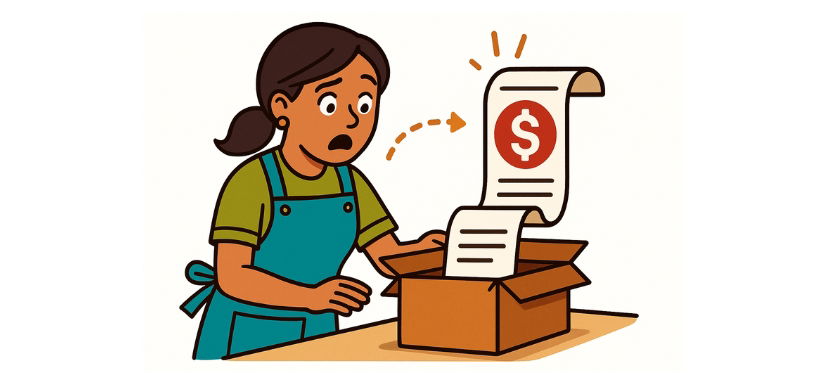
Because they don't know what their products actually cost to make.
Every week, one practical tip on pricing, materials, and COGS — the numbers that turn a busy craft business into a profitable one.
Sent weekly. Unsubscribe any time.






![How to Calculate Unit Cost for Handmade Products [Formula + Examples]](https://craftybase.b-cdn.net/static/blog/posts/how-to-calculate-unit-price-of-product-d55297b7a57b6efba0af0785dcea7720a9496657e9576218b76bec19d0d763d7195c982289ea568b0bcb00436a45b17a89b12c7599ec889ba20d1f087f865e86.png)