handmade success
Types of Candle Wax — Pros and Cons (2026 Maker's Guide)
We discuss the pros and cons of different waxes commonly used in candle making, so you can choose the best one for your products with confidence.
Choosing a candle wax is one of the first real decisions you’ll make as a candlemaker, and it affects everything: burn quality, fragrance throw, price per batch, and how your candles are positioned to customers.
Each wax type has different properties that impact the look, feel and burn of your finished product. There is no single “best” option, but understanding the trade-offs will help you choose the right wax for your specific candle and business goals.
Need to get your raw material and product inventory under control?
Try Craftybase - the inventory and manufacturing solution for DTC sellers. Track raw materials and product stock levels (in real time!), COGS, shop floor assignment and much more.
It's your new production central.
Candle Wax Comparison Chart
Here’s a quick side-by-side look at all six wax types across the factors that matter most for your candle business.
| Wax Type | Cost/lb (USD) | Burn | Fragrance Throw | Eco-Friendly | Vegan | Best For | Availability |
|---|---|---|---|---|---|---|---|
| Soy | $1-2 | Clean | Good | Yes | Yes | Container | Easy |
| Beeswax | $5-8 | Clean | Moderate | Partly | No | Container, pillar | Moderate |
| Coconut | $3-5 | Clean | Excellent | Yes | Yes | Container | Hard |
| Palm | $2-3 | Clean | Good | No | Yes | Pillar, votive | Moderate |
| Paraffin | $1-2 | Smoky | Excellent | No | Yes | All types | Easy |
| Rapeseed | $2-4 | Clean | Good | Yes | Yes | Container | Hard |
Soy wax
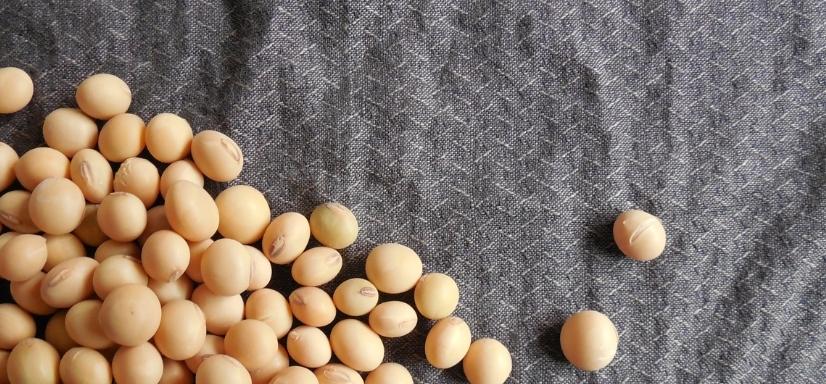
This vegetable wax is made from harvested soybeans that have been cleaned, cracked, and rolled. Soybean oil is then extracted and hydrogenated to create soy wax. This natural wax is ready made for candle making and popular for container candles.
Soy wax is known to hold fragrances well, making it a good type of wax for scented candles. It is also widely available, affordable, environmentally friendly and smokeless, making it one of the better wax types for candle making.
However, this wax does not hold and dissolve pigments and thus will create pastel shades rather than create bold colors.
In addition, soy wax can be quite soft, so it is not recommended to use in pillar candles.
Soy Wax Pros and Cons:
Pros:
Soot free
All-natural
Clean burning
Good fragrance throw
Available
Inexpensive
Environmentally friendly
Cons:
Not good for pillar candles
Can be soft
Will not hold color
Beeswax
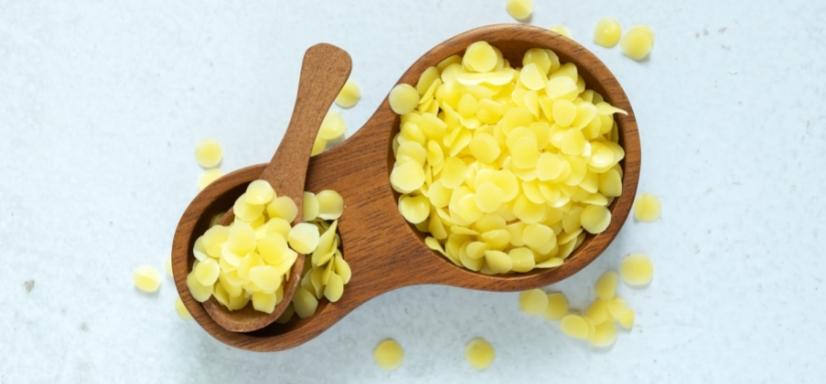
Also known as honeycomb, beeswax is harvested from beehives, melted, and then fit into blocks, sheets, and pastilles. This form of wax comes in various shades, including gold, white and yellow.
While beeswax is not vegan friendly, it is natural and versatile, working well to create homemade candles. As they are sourced from honeycombs, it gives off a sweet fragrance when lit.
Beeswax candles are also known to “clean the air”, by neutralizing pollutants in the air.
On the downside, beeswax is a more expensive wax type than soy wax and paraffin wax.
While it has a natural sweet scent, it does not hold fragrances as well as other types, beeswax typically maxes out at 3-6% fragrance load, compared to 10-12% for soy. You’ll want to use our candle fragrance load calculator to get the exact weight for your batch, and read up on calculating fragrance loads for different wax types.
Beeswax Pros and Cons:
Pros:
Natural
Soot free
Works well in candles
Can “clean the air”
Has a natural sweet scent
Cons:
Not vegan-friendly
More expensive
Doesn’t hold fragrances well
Coconut Wax
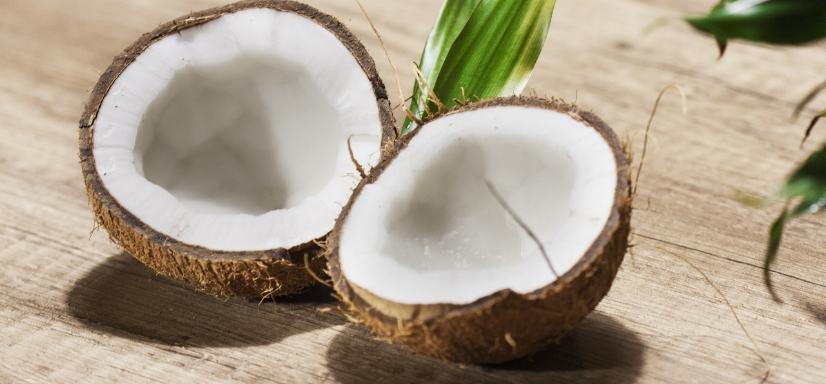
Coconut wax is made from hydrogenated coconuts and is a relatively new wax. This wax, when melted, creates a creamy and soft texture, similar to coconut oil. Coconut wax also has an odorless scent, which is a plus if you do not like the scent of coconuts.
The use of coconut wax has become increasingly popular, due to its scent throw, even burn and eco-friendliness. However, as this wax is still new to the market, it is difficult to find.
Coconut Wax Pros and Cons:
Pros:
Clean burning
Good fragrance throw
Eco-friendly
Holds color
Soot free
Even burn
Cons:
New to the market
Difficult to find
Can be more expensive
Palm Wax

Similar to soy wax, this wax is made and processed from palm. This is a hard wax, making it good for pillar candles and votive candles. Once dry, this wax creates unique crystal-like patterns on the surface. Consider using palm wax if you intend to add color and fragrances to your candles, as it holds pigments and fragrances well.
The production of this wax, however, has been said to produce big environmental issues, due to the deforestation of palm trees to create palm oil and wax. The result of deforestation has shown a dramatic impact on biodiversity while contributing to CO2 emissions.
Thus, if you are looking for a more eco-friendly wax, you might want to steer clear of using palm wax.
Palm Wax Pros and Cons:
Pros:
Holds color
Good fragrance throw
Unique crystal patterns
Cons:
Has a large environmental impact
Can be difficult to find
More expensive
Paraffin wax
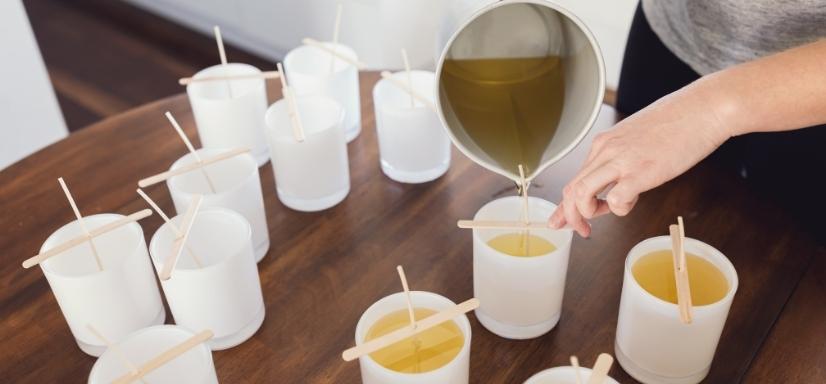
Paraffin is one of the most common and widely used candle wax. This wax is synthetic, made with petroleum, coal, or shade oil. It is also versatile for candles and known for its opacity, lack of odor and consistent burn qualities.
This type of wax is affordable and easy to use. As it has different melting points, paraffin wax can be used for various types of candles including pillar candles, votive candles, and taper candles.
However, paraffin wax is not the healthiest and eco-friendliest wax out there. as this wax is made from petroleum, it creates carcinogenic smoke and soot which is toxic for humans.
If you are looking for a more environmentally friendly option, soy wax or beeswax may be a better choice.
Paraffin wax Pros and Cons:
Pros:
widely available
affordable
easy to use
versatile
consistent
Cons:
not eco-friendly
not healthy
Rapeseed Wax
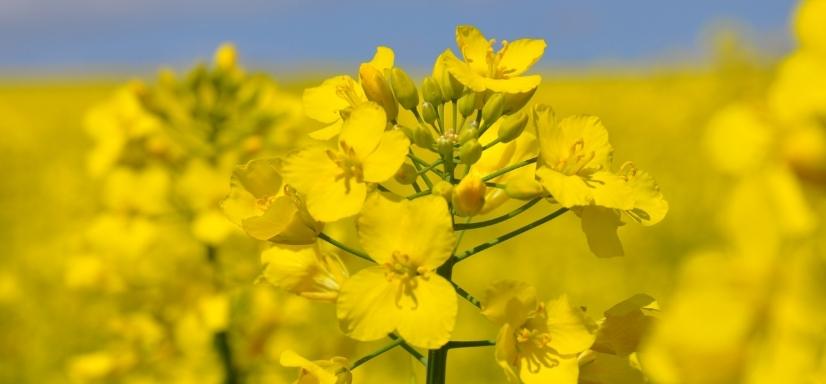
Coming from the plant itself, rapeseed wax is able to retain fragrances and has a long burn time. While it is also new to the market, various brands have already adopted this wax as an alternative to soy wax.
As intensive farming techniques are not used to produce this wax, it is a sustainable, biodegradable, and more eco-friendly alternative to other waxes. This wax also does not produce soot or smoke, making it less toxic than other waxes such as paraffin wax.
Rapeseed Wax Pros and Cons:
Pros:
Good fragrance throw
Eco-friendly
Long burn time
Soot free
Cons:
New to the market
Difficult to find
Can be more expensive
How much does candle wax cost?
Wax is usually your biggest material cost, so knowing the approximate price per pound matters, both for pricing your candles profitably and for understanding which wax types are realistic at your production volume.
Here’s a rough guide to 2026 wholesale prices per pound (US market):
- Soy wax — $1-2/lb. The most affordable natural option and widely available from craft suppliers.
- Paraffin wax — $1-2/lb. Comparable to soy, and often the cheapest option in bulk.
- Palm wax — $2-3/lb. Slightly more than soy, though harder to source from sustainable suppliers.
- Rapeseed wax — $2-4/lb. Prices vary depending on country of origin and supplier.
- Coconut wax — $3-5/lb. Premium natural option; price reflects limited supply and processing costs.
- Beeswax — $5-8/lb. The most expensive wax type by a significant margin.
Prices fluctuate with commodity markets, so it’s worth tracking your actual per-batch material costs rather than relying on estimates. Craftybase lets you log the exact cost of every wax purchase and automatically rolls those costs into your recipe costing, so your margins stay accurate even when supplier prices change.
Considerations when choosing candle wax for your candle
There are many pros and cons to consider when choosing a type of wax for your candle.
One practical consideration that’s easy to overlook: different waxes have different densities when melted, which means the same weight of wax takes up a different volume depending on the type you’re using. Soy wax melts to around 0.90 g/mL, beeswax to about 0.95 g/mL, and coconut wax to around 0.92 g/mL. If you’re scaling a recipe and your measuring vessel is marked in millilitres rather than grams, our grams to mL converter for candle makers handles these density differences for each wax type automatically.
Some factors you may want to consider include:
Smokeless burn
Natural wax
Eco friendly
Scent throw (which depends heavily on the fragrance load your wax can hold)
Burn quality and performance (run a burn test before committing to a wax)
On top of these factors, also take into account the type of candle you would like to make, as certain waxes may suit certain candle types better than others.
Alternatively, try blending various candle waxes for your candle. There are various different blends to choose from, with the most common being soy and paraffin.
Other blends include:
Soy and palm wax
Coconut and beeswax
Beeswax, coconut and soy wax
Combining various blends can give you the best of both worlds. For example, blending coconut wax with soy wax can give you a creamy texture while providing a long burn time.
Track your wax costs and recipes with Craftybase
Wax is your biggest material cost, and the right choice only pays off if you know your true cost per candle. That means tracking the exact price you paid for each batch of wax, which formula you used, and what your finished goods actually cost to make.
Craftybase candle inventory software handles this automatically. Enter your wax purchases and it rolls the material cost into your recipe costing, so your margins stay accurate even when supplier prices change. You can also use our free candle inventory spreadsheet to get started if you’re not ready for software yet.
Frequently Asked Questions
What is the best candle wax for beginners?
Soy wax is the most popular choice for beginner candle makers. It's widely available, affordable, easy to work with, and produces a clean, soot-free burn. Soy wax holds fragrance well, making it ideal for scented container candles. It's also natural and environmentally friendly. The main limitation is that soy wax doesn't hold colour well and is too soft for pillar candles, but for container candles, it's the easiest starting point.
What is the difference between soy wax and paraffin wax for candles?
Soy wax is natural, eco-friendly, and burns cleanly without soot or toxins. Paraffin wax is synthetic, made from petroleum, and is the most widely used wax commercially. Paraffin is more versatile (suitable for pillar, votive, and taper candles) and holds colour and fragrance excellently. However, it produces carcinogenic soot when burned. Soy wax is the better choice for health and environmental reasons; paraffin wins on versatility and cost.
Which candle wax has the best fragrance throw?
Coconut wax and soy wax are both praised for excellent fragrance throw among natural wax options. Paraffin wax also performs very well for scent. Beeswax, while naturally sweet-smelling, doesn't hold added fragrances as well and requires higher fragrance loads to achieve similar results. The fragrance throw you get from any wax depends not just on the wax type but also on the fragrance load percentage and wick size you use.
Is beeswax better than soy wax for candles?
Neither is objectively better, they suit different priorities. Beeswax burns longer, is naturally fragrant, and is said to neutralise pollutants in the air. However, it's not vegan-friendly and is considerably more expensive than soy wax. It also holds added fragrances less well. Soy wax is vegan, affordable, and has excellent scent throw. If eco-friendliness and vegan values are priorities for your brand, soy is the better fit. For premium, long-burn candles, beeswax is worth the higher cost.
Can I blend different types of candle wax together?
Yes, blending candle waxes is a common technique to combine the best qualities of each type. Popular blends include soy and paraffin (better colour and hardness with some eco benefit), coconut and beeswax (creamy texture with a long burn), and soy, beeswax, and coconut (a premium all-natural blend). Blending lets you customise burn time, fragrance throw, colour retention, and texture for your specific product. Experimenting with ratios is part of the candle-making process.